
Food and Beverage Industry
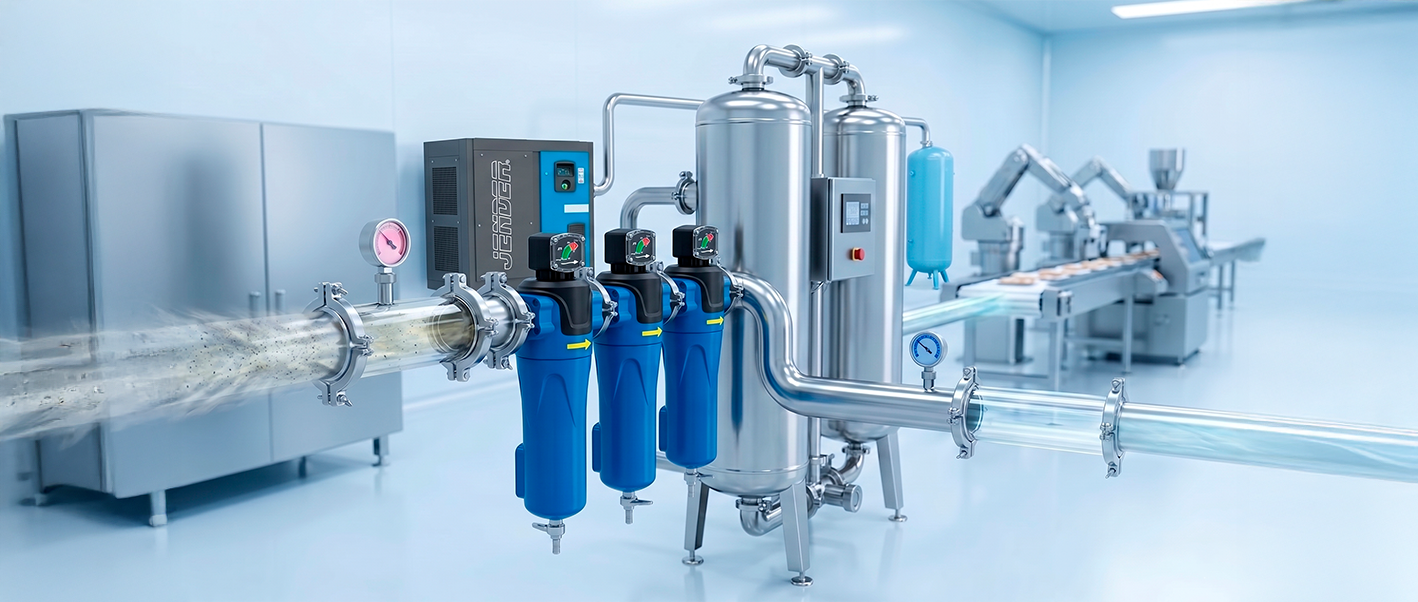
In food and beverage production, compressed air comes into direct contact with the product in processes such as packaging, container blowing, or pneumatic conveying of ingredients. Therefore, it must meet the most stringent hygiene standards: any trace of oil, moisture, or particles can compromise entire batches and jeopardize consumer safety.
At Jender, we design and install compressed air systems specifically for food production environments, with equipment and networks that guarantee air purity at every point of use in accordance with ISO 8573.
Importance of Compressed Air in Food Production
A contaminated air supply not only causes breakdowns in pneumatic machinery but also compromises food safety and can lead to penalties for regulatory non-compliance. Controlling particles, moisture, and oil residues is essential to prevent microorganisms or vapors from coming into contact with the product during its preparation.
At Jender, we integrate advanced filtration and drying systems into every installation to protect food integrity and optimize the performance of pneumatic equipment. The result is a plant that operates with maximum efficiency under the sector’s most rigorous quality standards.
Key Applications in the Food and Beverage Industry
Compressed air is involved in multiple stages of the production chain. These are the most common applications where Jender provides technical solutions:
Automated Packaging and Sealing
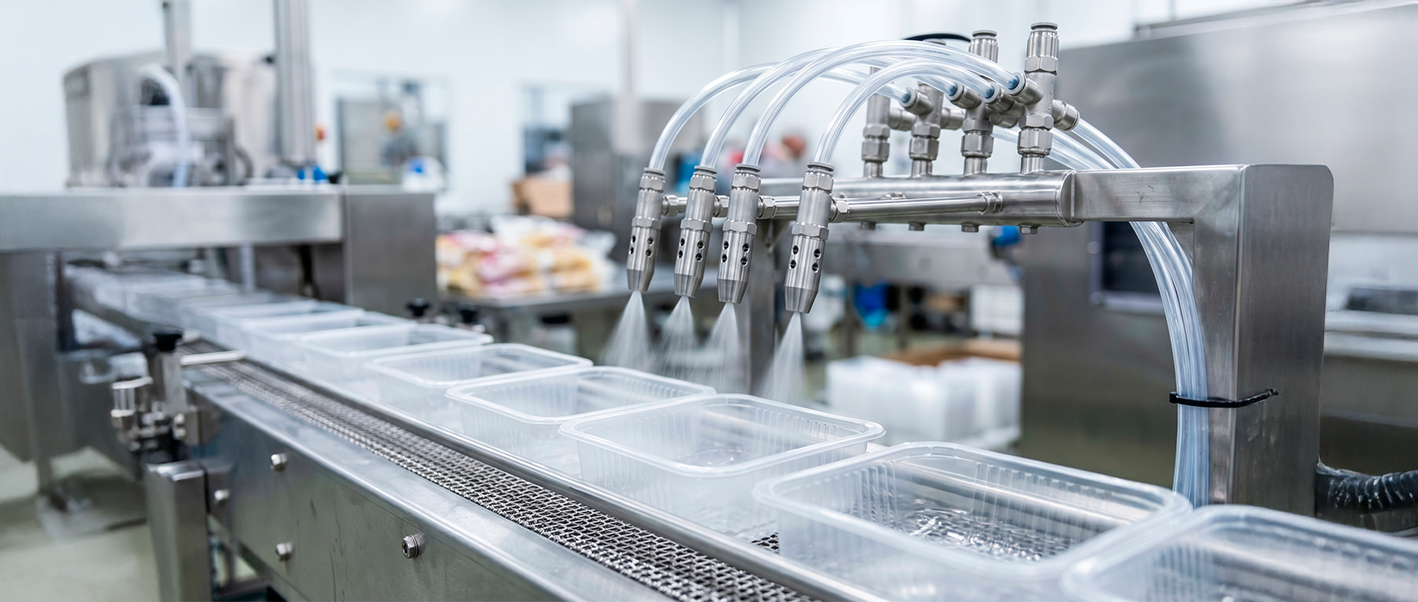
Pneumatic systems that manage box forming, vacuum sealing, and labeling depend on residue-free air. A clean supply prevents pneumatic component blockages and maintains a constant production rhythm without unforeseen technical stoppages.
Bottling and Container Blowing
Blowing PET preforms and internal cleaning of bottles before filling require a particle-free air flow. This ensures that each container meets sanitary requirements before coming into contact with the beverage or liquid food.
Pneumatic Conveying of Ingredients
The movement of solid products, grains, or powders by compressed air along the production line eliminates manual handling, reduces the risk of cross-contamination, and allows for rapid transfer between different areas of the plant.
Machinery Cleaning and Drying
After water cleaning cycles, compressed air is the most effective tool for rapid surface drying and blowing away residues in hard-to-reach areas. Maintaining a pneumatic drying routine helps comply with daily hygiene protocols in direct food handling areas.
Recommended Jender Equipment for the Food Sector
After analyzing the specific needs of this sector, these are the equipment from our catalog that best guarantee operational continuity and air purity in food plants:
Screw Compressors for Continuous Processes
Food production lines that operate without interruption require a stable, high-capacity supply. Our screw compressors are designed for optimal energy management, providing the necessary power to feed automation and industrial blowing with minimal noise and vibration.
Aluminum Piping for Hygienic Air Networks
Iron or galvanized steel pipes pose a real risk in food environments due to rust and particle generation. Jender aluminum piping is unalterable, does not release residues, and maintains air quality from the compressor to every point of use. Furthermore, its smooth internal surface reduces friction, optimizes energy consumption, and facilitates periodic cleaning of the network.
Installation of Compressed Air Networks for Food Plants
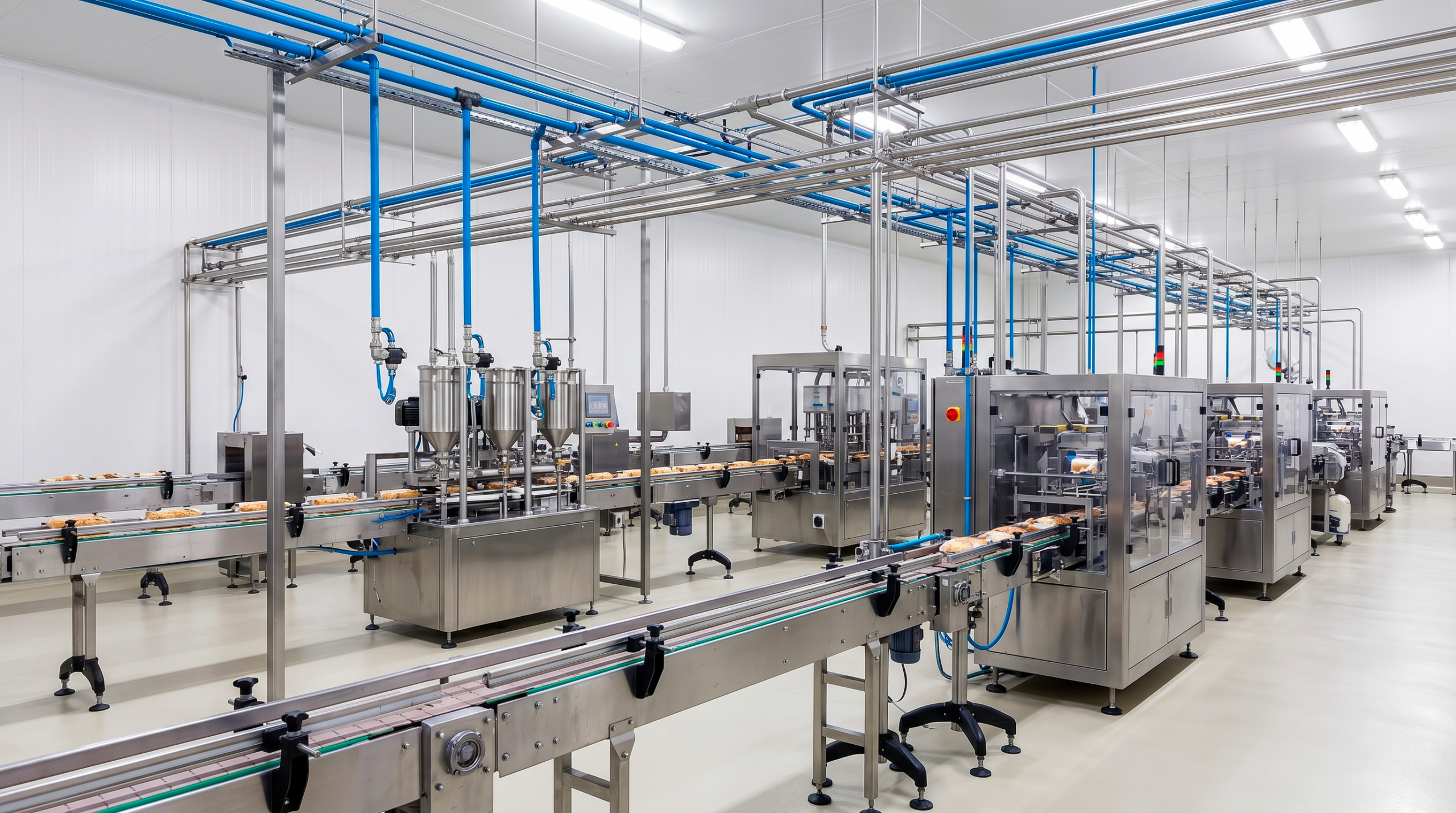
The air distribution network in a food plant must be completely sealed and made of materials that do not generate contaminants. At Jender, we install complete networks using aluminum piping, a material that resists the humid environments common in cleaning areas and does not produce corrosion particles.
Our modular installations integrate with existing machinery and allow for future line expansions without welding or complex construction. We design each section of the network to eliminate points where condensation can accumulate, ensuring that each air outlet delivers a dry and clean flow.
To complete the system, we incorporate automatic drains and high-efficiency filtration units at critical points of contact with food, so that your installation complies with quality and food safety audits from day one.
Advantages of Choosing Jender for Your Food Plant
In the food sector, an air supply failure can halt entire production. Relying on Jender as a technical provider offers concrete advantages:
Food Regulations Consulting
We analyze your production process to ensure that the air system complies with ISO 8573 standards and the requirements of health authorities, avoiding penalties and risks during audits.
Food-Grade Materials
We use components designed to withstand the intensive work of food and beverage plants. Our aluminum solutions and technical filtration are manufactured to last for years without degrading or releasing contaminants into the air flow.
Technical Support and Consumables Stock
Maintaining air purity requires constant preventive maintenance. We keep a permanent stock of filter cartridges and consumables to ensure your air treatment system always operates at peak performance.
Contact Jender
Get in touch with us and our team of experts will advise you on everything you need.



