
Home - Piston Compressors
Piston compressors for industry
If you are looking for reliable, competitively priced piston compressors, Jender manufactures them.
Receive your quote in under 24 hours
Complete range of piston compressors
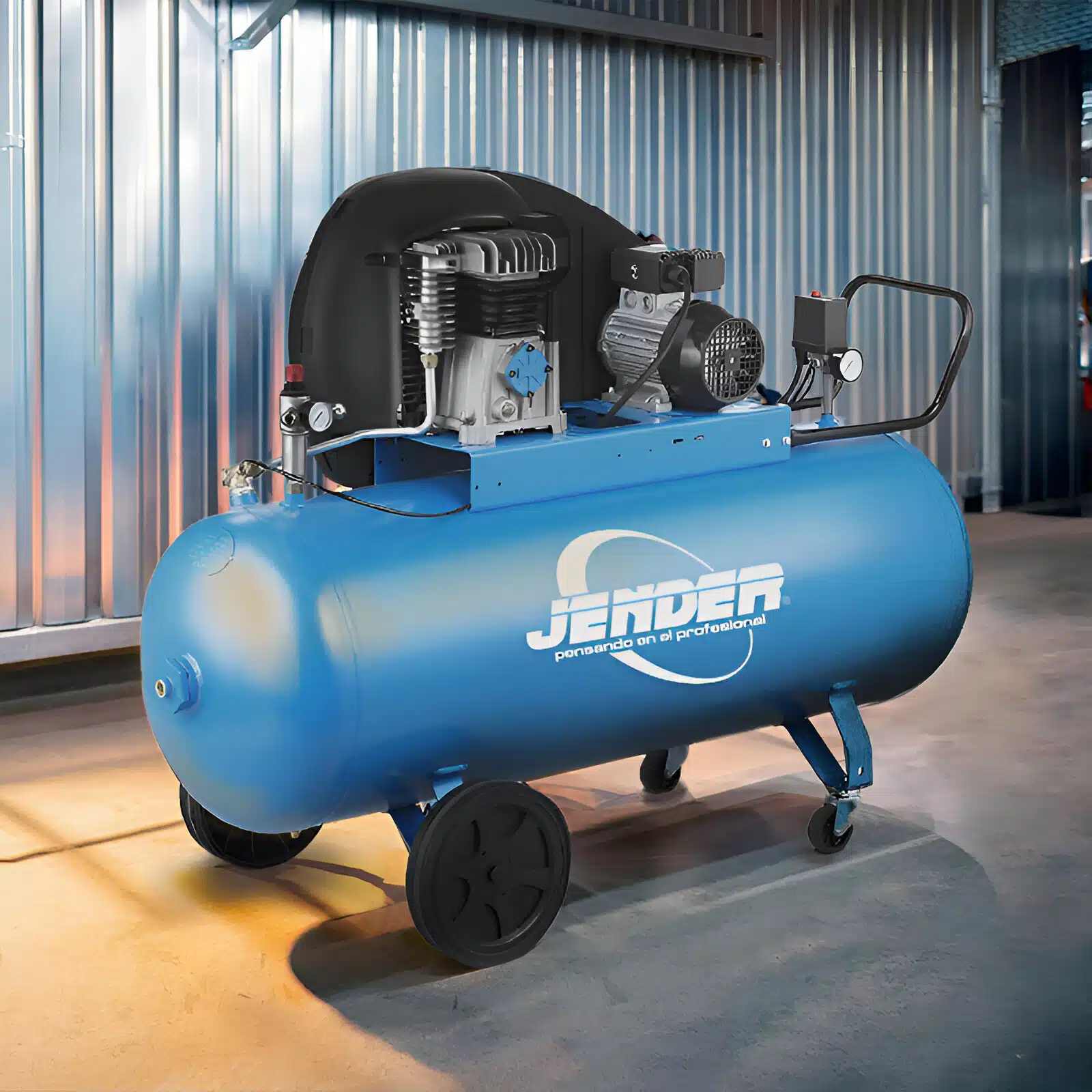
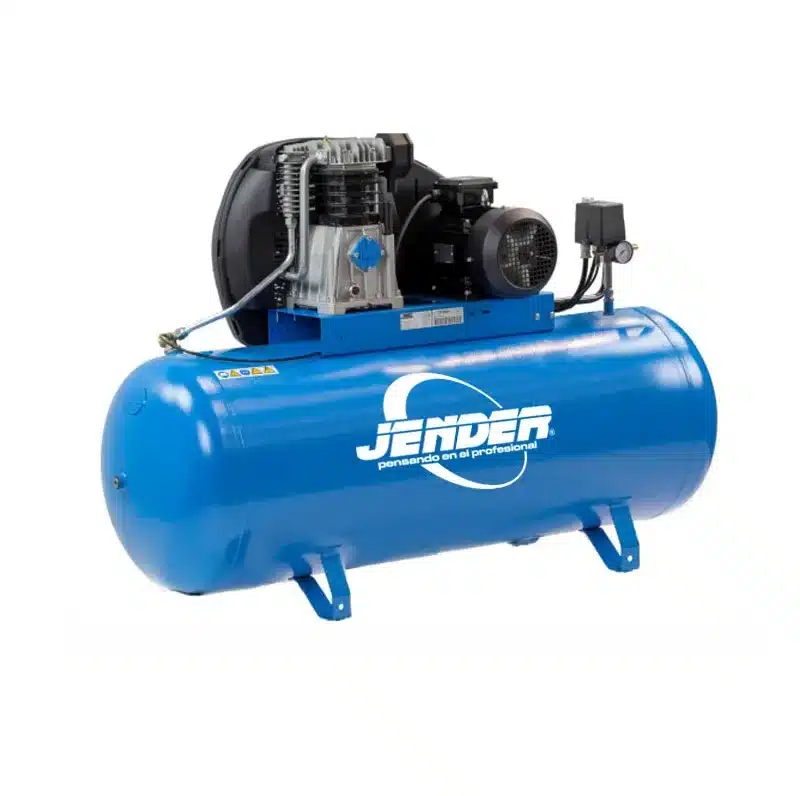
For higher demands, belt-driven models with 100 to 300-litre tanks and power ratings from 2 to 5.5 hp handle the day-to-day needs of mechanical workshops, carpentry shops and small industries. And when a high flow rate is required, 7.5 and 10 hp units with a 500-litre tank provide enough air for several simultaneous outlets on a production line.
How to choose the right PISTON compressor
Choosing the right piston compressor helps you avoid running short of air or overpaying for an oversized unit.
Air flow rate
Add up the consumption (l/min) of the tools you will use at the same time and add a 20% margin. That figure sets the minimum power required.
Working pressure
For standard workshop tools, 8 bar is sufficient. If you need 10–11 bar (sandblasting, industrial painting), choose a two-stage model.
Tank size
Occasional use: 25–100 litres. Workshop with multiple outlets: 200–500 litres. A larger tank reduces motor starts and stabilises pressure.
Power supply
Up to 3 hp, single-phase (230 V) versions are available. From 4 hp upwards, three-phase (400 V) is the most common and more efficient option.
Types of JENDER piston compressors
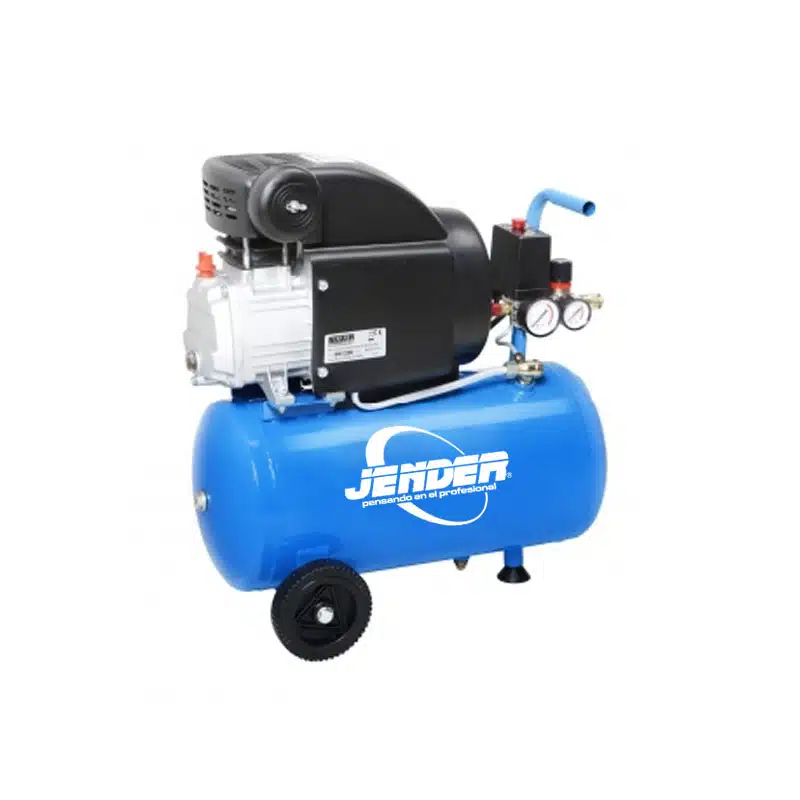
- By number of stages: Single-stage models compress air in a single cylinder and reach up to 8 bar: enough for most workshop tools. Two-stage models compress first in a low-pressure cylinder and then in a high-pressure one, reaching 10–11 bar with less strain on the motor and better performance.
- By lubrication type: Oil-lubricated models withstand more intensive duty cycles and last longer. Oil-free models require less maintenance and produce cleaner air, but their service life is shorter.
- By drive type: Direct-drive models are compact and easy to transport, ideal for occasional use. Belt-driven models run the pump head at lower RPM, reducing wear and noise: the preferred option in professional workshops.
- By portability: Models with wheels and a lightweight frame can be moved wherever you need them. Stationary units, mounted on 200 to 500-litre tanks, are installed in a fixed location and supply a compressed-air network.
Why choose a JENDER piston compressor?
Direct manufacturer
We design and assemble using European components. With no intermediaries, the price is more competitive without compromising quality.
Free technical advice
A technician reviews your case before purchase and recommends the exact unit for your installation.
Spare parts always in stock
By controlling manufacturing, we guarantee original parts are available throughout the compressor’s service life.
24–48-hour delivery.
All models ship from our warehouse in Alicante with fast delivery anywhere in Spain.
Oil-lubricated piston compressors: why Jender backs this technology
Do you need help choosing your compressor?
Frequently asked questions about piston compressors
What power (hp) of piston compressor do I need?
Add up the air consumption (in l/min) of all the tools you will use at the same time and add a 20% margin: that figure sets the minimum power. As a reference, 2-3 hp units cover a small workshop and 5.5 to 10 hp units cover installations with several simultaneous outlets. If you have any doubts, our technical team will calculate it with you free of charge.
Single-phase or three-phase piston compressor?
Up to 3 hp, single-phase (230 V) versions are available, ideal for occasional use or small workshops. From 4 hp upwards, three-phase (400 V) is standard, which is more efficient and recommended for continuous or industrial use.
How many litres of tank capacity do I need?
For occasional use, a 25 to 100-litre tank is sufficient. In a workshop with several outlets or frequent consumption, 200 to 500 litres is advisable: a larger tank reduces motor starts and stabilises the pressure, extending the life of the compressor.
Should I choose a piston or screw compressor?
Piston compressors are more economical and easier to maintain, ideal for intermittent use or consumption peaks. Screw compressors provide continuous flow and are designed to run for many hours at a time. If your air demand is constant and high, consider our screw compressors; for variable consumption, piston is more cost-effective.
What after-sales service and spare parts does Jender offer?
We provide technical support 365 days a year because we know that the most expensive machine is the one that stops. As manufacturers, we keep original spare parts in stock throughout the entire service life of the compressor, with competitive after-sales prices.
How long will it take to receive my piston compressor?
Models in stock are shipped from our Alicante warehouse in 24–48 hours to any point in Spain.



