
An air compressor is a machine that takes ambient air, compresses it to increase its pressure, and stores it in a tank for use as an energy source. This pressurized air can power pneumatic tools, operate industrial machinery, apply paint, inflate tires, or drive automation systems, among many other applications.
It is, in essence, a versatile and clean energy source that replaces or complements electric motors in a multitude of processes. If you are considering whether you need one, or simply want to understand its purpose before choosing, this article will outline the most common uses and how to determine which equipment suits your needs. If you already know that your facility requires continuous and intensive use equipment, you can directly view our range of industrial screw air compressors.
What Exactly Does an Air Compressor Do?
The process is simple in concept but critical in execution. The compressor draws air from the environment through a filter, compresses it using an internal mechanism (piston, screw, or other), and stores it in a receiver at the configured working pressure. From this tank, the air is released in a controlled manner to the tool or system that requires it.
What makes the compressor such a useful tool is precisely its ability to store energy in the form of pressure and release it precisely when needed, with a power that a conventional electric motor cannot provide as directly or as safely in many environments.
Working pressure is measured in bar. Most domestic and workshop pneumatic tools operate between 6 and 8 bar. More demanding industrial processes may require 10, 13, or more bar, which falls into the territory of larger industrial compressors.
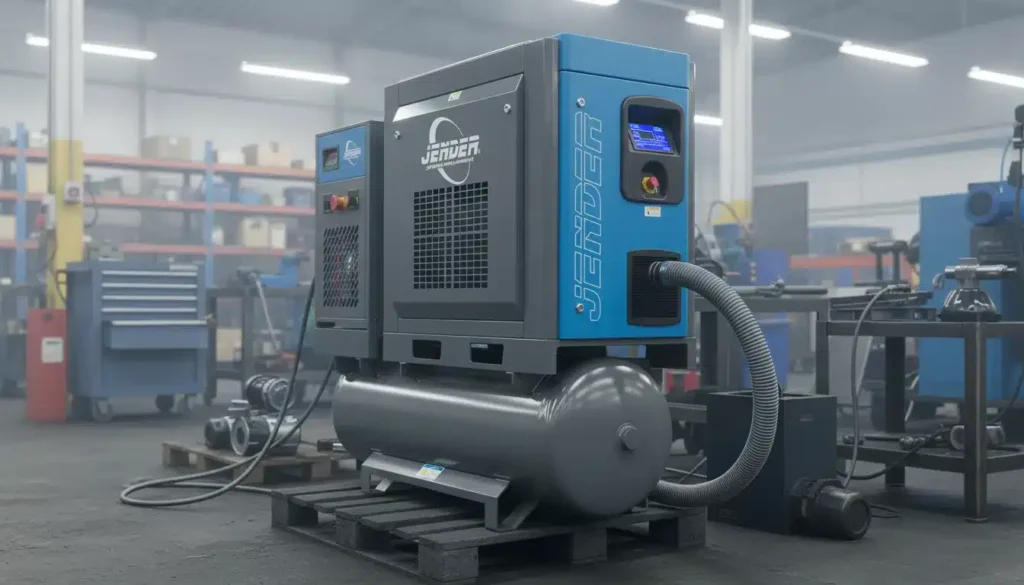
Uses of an Air Compressor in Domestic and Professional Settings
In domestic and small workshop environments, an air compressor solves tasks that would otherwise require more time, more effort, or less efficient tools:
- Tire inflation for cars, motorcycles, bicycles, or agricultural machinery, with exact pressure control.
- Spray painting: much more homogeneous finishes than with a roller or brush, in less time and with lower paint consumption.
- Compressed air cleaning: removal of dust, chips, or debris from surfaces, parts, or machinery without direct contact.
- Pneumatic workshop tools: impact wrenches, pneumatic drills, staplers, nail guns, or sanders that operate with air instead of electricity, offering more power and less weight.
- Stapling and nailing: essential in carpentry, upholstery, or floor installations, where the speed and precision of pneumatic nailing are unmatched.
For these uses, a single-phase piston compressor with a tank between 50 and 200 liters is usually more than sufficient, offering a reasonable initial investment and simple maintenance.
What is an Industrial Air Compressor Used For?
In the industrial sector, the compressor ceases to be a support tool and becomes the backbone of production. Without compressed air, many facilities simply cannot operate. Here, the criterion is no longer just “what is it used for,” but how many cubic meters per minute are needed, at what pressure, with what air quality, and for how many hours a day.
Manufacturing and Automation
Production lines rely on compressed air to move pneumatic actuators, open and close valves, control assembly robots, and power internal transport systems. In these environments, the compressor operates continuously, making equipment designed for 100% duty cycles without overheating or pressure drops essential.
Automotive and Bodywork
From assembly lines to vehicle preparation, compressed air powers impact wrenches, paint guns, spray booths, lifting systems, and diagnostic equipment. Air quality is crucial in paint booths: any trace of moisture or oil in the line can ruin an entire finish.
Food, Pharmaceutical, and Clean Air Sectors
In processes where air comes into contact with the final product, compressed air purity is not optional. Oil-free compressors or systems with high-efficiency filtration ensure no contaminants in the line. Sectors such as the food, pharmaceutical, cosmetic, and electronics industries regularly work with these standards.
Construction and Civil Engineering
On construction sites, the compressor powers pneumatic hammers, compactors, anchoring guns, and mortar spraying equipment. Here, portability and robustness are as important as flow rate, and diesel compressors or compact high-pressure models play a leading role.
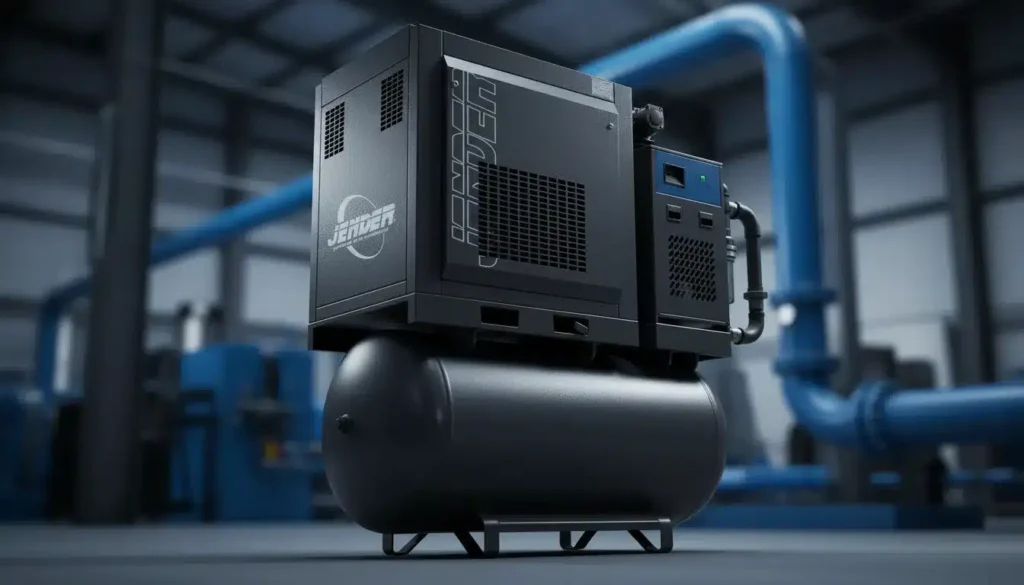
Do you know which compressor you need?
At Jender, we have been manufacturing air compressors for installers, workshops, industrial companies, and end-users for over 20 years. We know firsthand what each type of installation requires because we are manufacturers, not distributors, which allows us to offer European-made equipment at competitive prices with genuine technical advice.
Our range covers everything from professional piston compressors with tanks from 25 to 500 liters, to industrial screw air compressors from 3 to 315 kW with variable speed options, integrated dryers, and working pressures up to 13 bar.
If you are unsure which equipment you need, our technical team will advise you free of charge before you make any decision.



