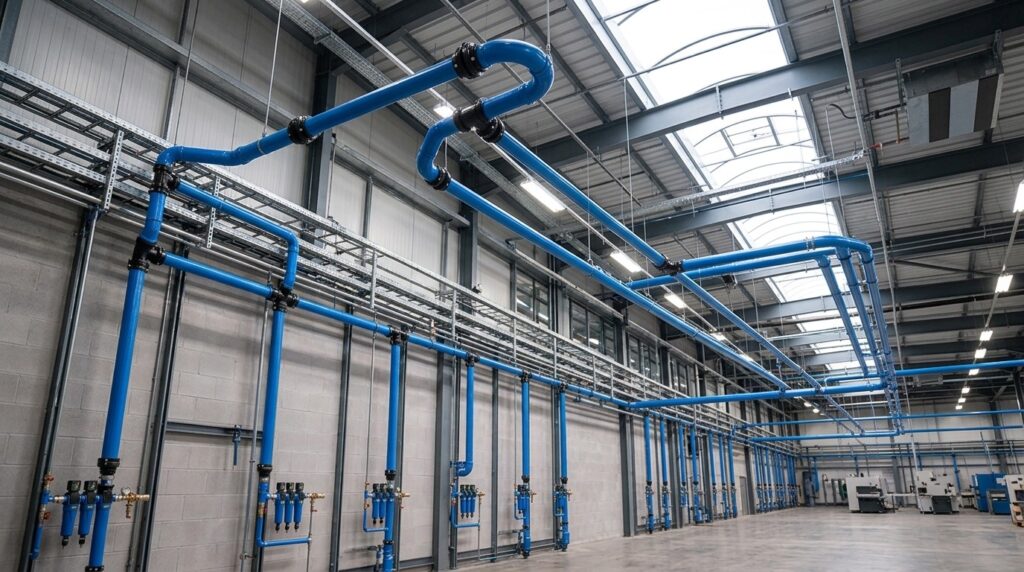
Maintaining a compressed air system involves periodically inspecting the entire distribution network (pipes, drain valves, dryers, filters, and consumption points) to prevent leaks, condensation, and pressure drops that drive up energy consumption and slow down production. This is not the same as maintaining the compressor: here, the focus is on everything that comes after the machine, from the moment the air leaves the receiver tank until it reaches each tool.
It’s a distinction that many industries overlook. They meticulously inspect the compressor but neglect the piping system, even though a significant portion of the efficiency losses in a pneumatic system occur precisely in the piping: at a poorly sealed joint, a clogged drain, or a section of pipe that’s incorrectly sized. Taking care of the compressed air system as a whole is what ensures that the investment in the compressor truly pays off.
Why is it so important to maintain the system, and not just the compressor?
Compressed air is the second most widely used source of energy in industry, and also one of the most expensive to produce. When the system loses efficiency, the compressor has to work harder to compensate, which directly affects the electricity bill. A poorly maintained system can waste between 20% and 30% of the air it produces through leaks alone.
In addition to energy costs, there is the cost of downtime. In a factory where compressed air powers the production line, a failure in the system means everything comes to a halt. That is why maintaining the system is not an optional expense, but rather an investment in uptime: every preventive maintenance check prevents a breakdown that would be much more costly.
Maintenance Tasks for a Compressed Air System
Network maintenance is organized by frequency. These are the tasks that keep a compressed air system in good working order throughout the year.
Condensate Drain
Compressed air generates water through condensation, and that moisture accumulates in the air receiver, at the low points of the piping, and in the filters. Draining the condensate regularly prevents internal corrosion of the system and keeps water from reaching the tools. Automatic drains make this task easier, but you must also check that they are working properly: a clogged drain allows water to leak without anyone noticing.
Leak Detection and Repair
Leaks are the silent enemy of any system. They occur at joints, fittings, hoses, and valves, and although they may seem insignificant individually, collectively they account for the greatest loss of efficiency in a system. Periodically inspecting connections and repairing any leaks is the maintenance task with the greatest direct economic return.
Inspection of Dryers and Filters
Dryers and filters ensure that the air reaching the points of use is dry and clean. Over time, the filters become clogged, increasing pressure drop and forcing the compressor to work harder. As a general guideline, filters should not be used for more than 12 months, and you should check that the dryer maintains the correct dew point, especially during the hot months when condensation increases significantly.
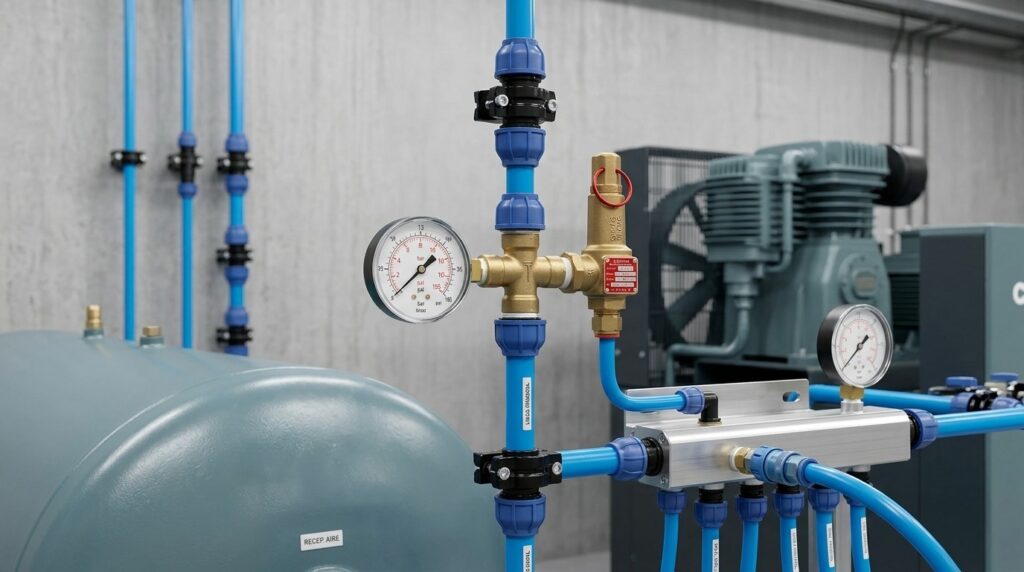
Testing Safety and Pressure Valves
Safety valves are a critical component: they ensure that the system does not exceed the maximum allowable pressure. Verifying that they are functioning properly is a matter of both efficiency and safety, and is part of the mandatory inspections for any industrial facility.
How often should maintenance be performed on the system?
There is no single schedule that applies to all facilities, as it depends on operating hours, the type of industry, and environmental conditions. As a general guideline, condensate drainage and visual inspections are performed daily or weekly; filter and dryer checks, as well as leak detection, are performed monthly or quarterly; and a complete system review, along with regulatory inspections, is performed annually. Adapting this schedule to the actual usage of each plant is precisely what distinguishes effective maintenance from generic maintenance.
It’s important to remember that maintaining the system goes hand in hand with maintaining the air compressor: a machine in perfect condition is useless if the air distribution system is full of leaks—and vice versa. The two form a single system that must be maintained as a whole.
Regulations: What Are the Legal Requirements for a Compressed Air System?
In Spain, industrial compressed air systems are subject to the Pressure Equipment Regulation (Royal Decree 809/2021). This means that tanks and pressure equipment must undergo periodic inspections by accredited inspection bodies, in addition to the system’s routine maintenance. Compliance with these inspections is not only a legal obligation—it also ensures that the system operates within safe limits. That is why preventive maintenance and regulatory compliance always go hand in hand.
Signs That Your System Needs Urgent Maintenance
There are warning signs that the system needs attention before a major breakdown occurs: pressure drops at the farthest consumption points, the presence of water or oil in the air outlet, an unexplained increase in the compressor’s power consumption (which usually indicates leaks), audible exhaust noises at the connections, or pneumatic tools performing below their usual level. If any of these signs appear, scheduling a service check early prevents a minor problem from turning into a system shutdown.
Keep your system in top shape with Jender
At Jender, we know that the most expensive machine is the one that’s down. That’s why, in addition to designing and installing compressed air systems, we provide after-sales service throughout Spain 365 days a year, with a network of technicians and installers and spare parts at competitive prices. Whether you need a maintenance plan for your system or are looking to resolve a breakdown as quickly as possible, our team will help ensure that the air supply to your production line never stops. Tell us about your system, and we’ll prepare a customized proposal for you.



