
Compressed air is one of the most widely used utilities in the food industry: it is used in packaging, blowing out containers, the pneumatic transport of ingredients, cleaning equipment, and operating valves and automated systems. The problem is that, in many of these processes, the air comes into direct or indirect contact with the product, so any traces of oil, moisture, or particles can compromise an entire batch and put consumer safety at risk.
That is why, in the food and beverage industry, compressed air is not just another source of energy—it is a critical control point that must be monitored with the same rigor as water or the ingredients themselves. Understanding which contaminants pose a threat and what quality standards each process requires is the foundation for safe production—and the starting point for any compressed air solution in the food industry.
What Is Compressed Air Used For in Food Production?
There are numerous applications that span nearly the entire production chain. These are the most common ones:
Packaged and sealed. Pneumatic systems that form boxes, vacuum-seal them, and apply labels rely on clean air to prevent clogging and contamination of the packaging.
Blow molding of containers. The blowing of PET preforms and the internal cleaning of bottles prior to filling require an air supply that is free of particles and oil, because that air comes into contact with the surface that will hold the food.
Pneumatic conveying. Conveying powders, grains, and dry ingredients using air reduces manual handling, but brings the air into direct contact with the product.
Cleaning and drying. After the water-cleaning cycles, compressed air dries the surfaces and blows away debris from hard-to-reach areas—a daily task in handling areas.
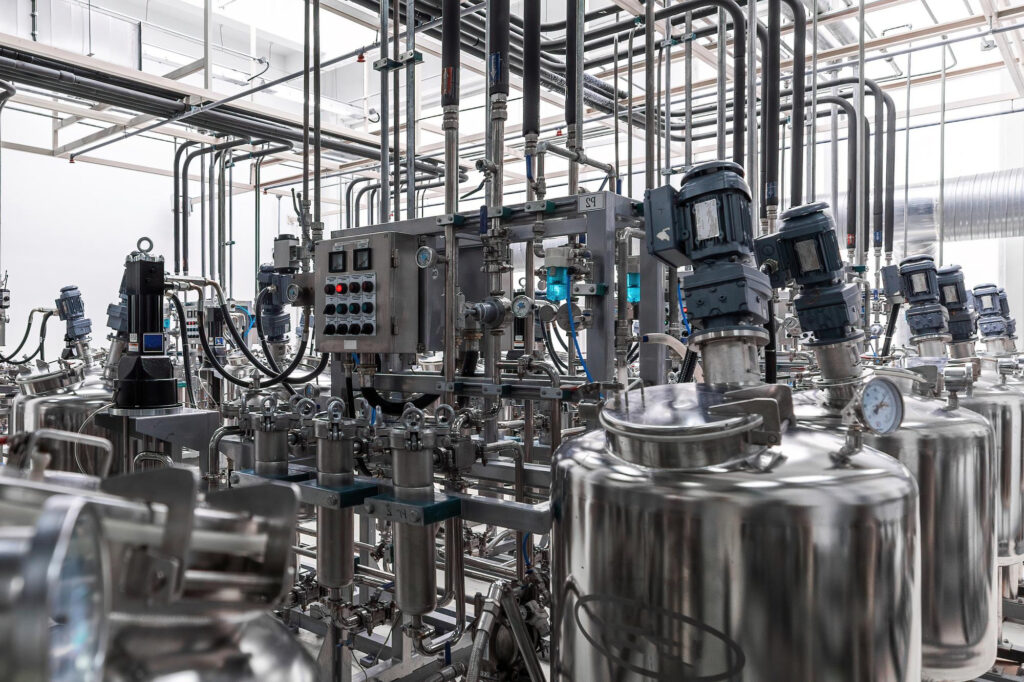
Contaminants in Compressed Air That Pose a Threat to Food
The air drawn in by a compressor is ambient air, and compressing it concentrates the impurities it contains. Three of these are particularly dangerous in a food-processing environment. Solid particles (dust, pollen, and rust from the piping itself) can settle on the product. Moisture, which condenses inside the pipes, promotes the growth of bacteria, molds, and yeasts. And oil—whether from the lubrication of some compressors or from the environment—can alter the flavor and chemically contaminate the food. Added to this is the microbiological risk: warm, humid air is the ideal breeding ground for microorganisms.
Direct and indirect contact: Not all air needs to be equally pure
A key principle in the industry is that the required quality depends on whether or not the air comes into contact with the product. In direct contact (air that blows into the interior of a package, carries an ingredient, or enters the product chamber), the requirements are the strictest: virtually zero oil and very low humidity. In the case of indirect contact (air that merely moves cylinders or powers machinery without touching the food), the requirements are somewhat lower, though never negligible, because a leak or malfunction could ultimately affect the production line. Distinguishing between these two cases is what allows for proper sizing of the air treatment system without incurring extra costs or risks.
What air quality standards does the food industry regulation require?
The international standard is ISO 8573-1, which classifies compressed air based on its particle, water, and oil content. In the food industry, higher classes are typically required: for direct contact with food, Class 1.2.1 or 2.2.1 is recommended, with a very low dew point to inhibit bacterial growth, while for indirect contact, a slightly less stringent class may suffice. If you’d like to understand in detail how these classes work and what each number means, we explain it in our guide on the ISO 8573-1 standard and compressed air quality.
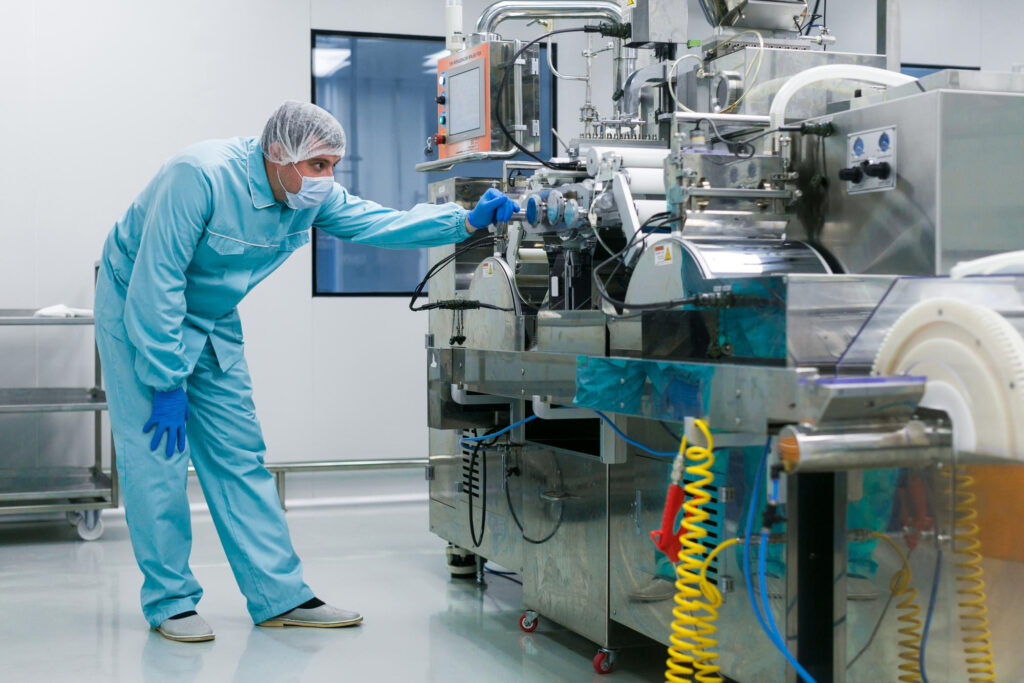
Food Safety Regulations and Certifications
There is no single law that specifically regulates compressed air in the food industry, but there is a framework of standards and certifications that indirectly require it. HACCP-based self-monitoring systems require that compressed air be identified as a potential hazard and controlled. Furthermore, the food safety certifications most commonly required by large retailers—such as BRCGS and IFS Food—require proof that the air in contact with the product meets a defined quality standard and undergoes regular testing. In practice, this makes air treatment and monitoring a requirement for selling to many customers.
How to Obtain Compressed Air Suitable for Food Use
Achieving the required purity does not depend on a single piece of equipment, but rather on a well-designed treatment chain. Oil-free compressors (Class 0) eliminate the risk of lubricant contamination at the source; dryers reduce humidity to the dew point necessary to prevent microbial growth; and coalescing and activated-carbon filters trap oil aerosols, particles, and residual odors. Added to this is a distribution network made of materials that do not introduce contaminants, such as aluminum piping, and ongoing preventive maintenance. Properly designing this combination is what guarantees safe air at every point of use.
Compressed Air Solutions for Your Food Processing Plant
At Jender, we design, install, and maintain compressed air systems specifically tailored for the food and beverage industry, featuring the appropriate filtration, drying, and materials to comply with regulations and pass quality audits, with technical service available throughout Spain 365 days a year. Tell us about your process, and we’ll help you determine the air quality you need and how to achieve it.



